
News
Flood Alert: FG Lists Adamawa, 32 Other States at Risk

Flood Alert: FG Lists Adamawa, 32 Other States at Risk
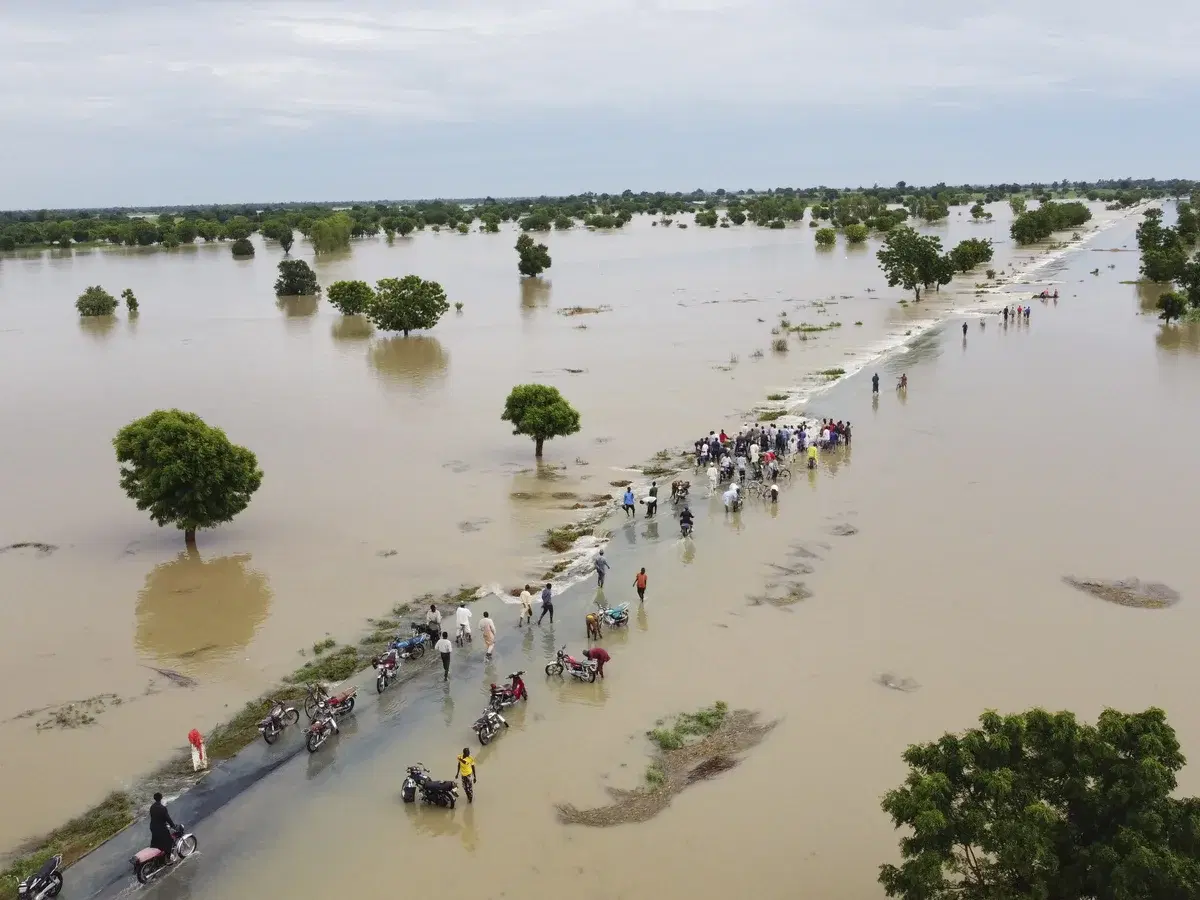
The Federal Government has issued a fresh warning that widespread flooding is likely to affect at least 33 states across Nigeria in 2026, as the rainy season begins.
The alert was contained in the 2026 Annual Flood Outlook (AFO), unveiled in Abuja by the Minister of Water Resources and Sanitation, Engr. Joseph Utsev, during a public presentation organised by the Nigeria Hydrological Services Agency (NiHSA).
According to the report, states such as Bayelsa, Delta, Adamawa, Kebbi and several others are expected to experience varying degrees of flooding, with authorities urging immediate preparedness to prevent a repeat of past disasters.
The government disclosed that about 14,118 communities across 266 Local Government Areas fall within high flood-risk zones. In addition, 15,597 communities in 405 LGAs are projected to face moderate flooding, while 923 communities may experience minimal impact.
The affected states include Abia, Adamawa, Anambra, Bauchi, Bayelsa, Benue, Borno, Cross River, Delta, Ebonyi, Edo, Enugu, Gombe, Imo, Jigawa, Kaduna, Kano, Kebbi, Kogi, Kwara, Lagos, Nasarawa, Niger, Ogun, Ondo, Osun, Oyo, Plateau, Rivers, Sokoto, Taraba, Yobe, Zamfara, and the Federal Capital Territory.
Utsev emphasized that the AFO serves as more than a scientific document, describing it as a critical tool for saving lives, protecting infrastructure, and reducing economic losses.
“Early warning information is vital. It helps safeguard livelihoods and ensures that both government and citizens can take proactive steps before flooding occurs,” he said.
The report also warned of flash and urban flooding in major cities due to heavy rainfall, poor drainage management, and inadequate infrastructure. Cities likely to be affected include Abuja, Lagos, Ibadan, Port Harcourt, Kano, Kaduna, and Yola, among others.
Coastal states such as Bayelsa, Delta, Lagos, Rivers, and Ogun may also experience flooding linked to rising sea levels and tidal surges, which could disrupt fishing activities, wildlife habitats, and river transport systems.
Utsev noted that the Federal Government has upgraded its hydrological monitoring systems and is working closely with the Nigerian Meteorological Agency (NiMet) to improve forecasting accuracy.
He added that new technologies, including AI-integrated modelling systems, have been introduced to enhance early warning capabilities and reduce false alarms.
The Director-General of NiHSA, Umar Ibrahim Mohammed, described the AFO as a key national planning tool that supports disaster preparedness, economic stability, and climate resilience.
In response to the forecast, several state governments say they have already begun mitigation efforts.
- Osun State has intensified dredging of rivers and clearing of waterways to prevent blockages.
- Ondo State reported ongoing drainage expansion, bridge construction, and public sensitisation campaigns.
- Oyo State said it has activated emergency response teams and increased awareness in vulnerable communities.
- Benue State has placed disaster management agencies on high alert and improved drainage infrastructure.
- Borno State is dredging rivers and desilting waterways while expanding drainage networks.
- Zamfara and Kebbi States have also launched early response strategies, including evacuation planning and distribution of safety equipment.
Call for Collective Action
The Federal Government stressed that while forecasts are important, their effectiveness depends on how well communities and authorities respond.
Officials urged state and local governments, as well as residents, to take preventive steps such as clearing drainage systems, avoiding construction on waterways, and adhering to early warning advisories.
With rainfall already intensifying in parts of the country, authorities say timely action will be crucial in reducing the human and economic toll of the anticipated floods.








IMF Urges FG Against Restoring Petrol Subsidy, Recommends Targeted Support for Vulnerable Nigerians

Hundreds of APM Members Defect to Labour Party in Adamawa’s Girei LGA Ahead of 2027

NBBF Zonal Rep Donates Basketball Equipment to Adamawa State Association


Adamawa Assembly Moves to Repeal College of Education Hong Law
IMF Urges FG Against Restoring Petrol Subsidy, Recommends Targeted Support for Vulnerable Nigerians
Hundreds of APM Members Defect to Labour Party in Adamawa’s Girei LGA Ahead of 2027
NBBF Zonal Rep Donates Basketball Equipment to Adamawa State Association
Adamawa Assembly Moves to Repeal College of Education Hong Law
IMF Urges FG Against Restoring Petrol Subsidy, Recommends Targeted Support for Vulnerable Nigerians
Hundreds of APM Members Defect to Labour Party in Adamawa’s Girei LGA Ahead of 2027
NBBF Zonal Rep Donates Basketball Equipment to Adamawa State Association