
Health
UNICEF warns of growing climate threats facing children worldwide

UNICEF warns of growing climate threats facing children worldwide
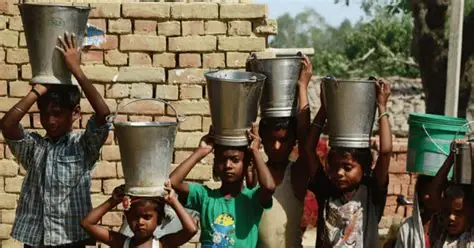
The United Nations Children’s Fund (UNICEF) warned on Tuesday that hundreds of millions of children around the world are facing growing risks linked to climate change, saying that extreme weather events are increasingly threatening their health, education and future prospects.
According to a report cited by Reuters, approximately 1.8 billion children are exposed to drought risks, while 1.2 billion are affected by extreme heat waves. More than 1.1 billion children face at least three overlapping climate-related hazards, raising concerns that multiple and interconnected risks could overwhelm governments and social service systems.
The report said that 662 million children live in areas exposed to tropical storms, while 337 million face the threat of river flooding and 33 million are vulnerable to coastal flooding. Nearly one billion children are also at risk of malaria, most of them in Africa.
UNICEF noted that climate-related disasters and extreme weather events disrupted the education of around 242 million children across 85 countries in 2024, underscoring the growing impact of climate change on education systems worldwide.
The agency called on governments to increase investments in climate-resilient infrastructure, strengthen climate adaptation and disaster risk management programs, and improve water, healthcare and social protection services.
UNICEF identified Somalia, Madagascar, Myanmar, Cambodia and Pakistan among the countries most vulnerable to climate-related threats affecting children, warning that water shortages and the broader impacts of climate change are expected to worsen in the coming years.
Rohini Somanathan Swaminathan, UNICEF’s Director of Data, Analytics, Planning and Monitoring, said the threat extends beyond exposure to individual hazards such as floods, droughts or heat waves, encompassing simultaneous exposure to multiple climate risks that further increase community vulnerability.
UNICEF has previously warned that children are among the groups most vulnerable to diseases expected to spread as a result of climate change, including malaria and dengue fever. The agency noted that children under the age of five bear nearly 90 percent of the disease burden attributable to climate change.

Olu Jacobs Dies at 84: Remembering the Life and Legacy of a Nollywood Icon

Condolence: AB HASKE Foundation Mourns Bamanga Tukur

Falconets Become Sole African Team in Knockout Stage After 10-1 Rout

Fintiri Mourns Ex-Gongola Governor, Bamanga Tukur, Declares Three Days Mourning

Fintiri Inaugurates ASCTIES Gulak Governing Board, Tasks Members on Development
Olu Jacobs Dies at 84: Remembering the Life and Legacy of a Nollywood Icon
Condolence: AB HASKE Foundation Mourns Bamanga Tukur
Falconets Become Sole African Team in Knockout Stage After 10-1 Rout
Fintiri Mourns Ex-Gongola Governor, Bamanga Tukur, Declares Three Days Mourning
Fintiri Inaugurates ASCTIES Gulak Governing Board, Tasks Members on Development
Olu Jacobs Dies at 84: Remembering the Life and Legacy of a Nollywood Icon
Condolence: AB HASKE Foundation Mourns Bamanga Tukur
Falconets Become Sole African Team in Knockout Stage After 10-1 Rout
Fintiri Mourns Ex-Gongola Governor, Bamanga Tukur, Declares Three Days Mourning