
Business
IMF Urges FG Against Restoring Petrol Subsidy, Recommends Targeted Support for Vulnerable Nigerians

The International Monetary Fund (IMF) has advised the Federal Government of Nigeria against reinstating a general petrol subsidy, recommending targeted financial assistance for vulnerable households to ease the impact of rising energy costs.
The Fund warned that a blanket fuel subsidy could place additional pressure on government finances, particularly amid increasing borrowing costs. It also noted that such subsidies often disproportionately benefit higher-income earners rather than the poorest citizens.
Rodrigo Valdés, Director of the IMF’s Fiscal Affairs Department, made the recommendation on Wednesday during a press briefing on the Fund’s Fiscal Monitor at the 2026 annual meetings of the IMF and World Bank in Bangkok, Thailand.
His remarks followed questions about the impact of rising fuel prices in Nigeria, where higher transportation costs could fuel inflation and worsen poverty. The discussion comes amid growing calls for the government to reconsider petrol subsidy removal ahead of the next election cycle.
Valdés maintained that protecting citizens from the effects of rising energy prices should not necessarily mean keeping fuel prices artificially low.
“Protecting people is not the same as protecting the price of fuels,” he said.
According to the IMF official, fuel subsidies and other measures that prevent energy prices from adjusting to market conditions cost countries between one and 1.5 per cent of their Gross Domestic Product (GDP) in 2026.
He further described broad-based fuel subsidies as financially burdensome and potentially regressive, arguing that their benefits are not always distributed fairly among income groups.
Instead, Valdés urged governments to strengthen social protection programmes and use household data to identify individuals and families most in need of assistance.
“There are better tools to deal with this,” he said.
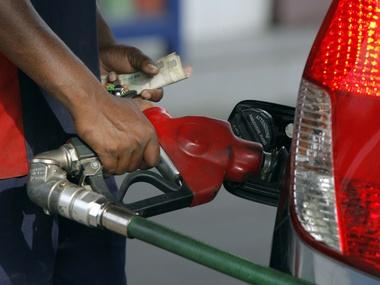
Meanwhile, the Federal Government recently announced a 30-day petrol discount at retail outlets operated by the Nigerian National Petroleum Company Limited (NNPC), with public transport operators given priority as part of efforts to reduce the burden of rising fuel prices.
The IMF’s position highlights the ongoing policy debate over how Nigeria can balance economic reforms and fiscal stability with the need to protect citizens from increasing living costs.
Fuel station

IMF Urges FG Against Restoring Petrol Subsidy, Recommends Targeted Support for Vulnerable Nigerians

Hundreds of APM Members Defect to Labour Party in Adamawa’s Girei LGA Ahead of 2027

NBBF Zonal Rep Donates Basketball Equipment to Adamawa State Association


Adamawa Assembly Moves to Repeal College of Education Hong Law
IMF Urges FG Against Restoring Petrol Subsidy, Recommends Targeted Support for Vulnerable Nigerians
Hundreds of APM Members Defect to Labour Party in Adamawa’s Girei LGA Ahead of 2027
NBBF Zonal Rep Donates Basketball Equipment to Adamawa State Association
Adamawa Assembly Moves to Repeal College of Education Hong Law
IMF Urges FG Against Restoring Petrol Subsidy, Recommends Targeted Support for Vulnerable Nigerians
Hundreds of APM Members Defect to Labour Party in Adamawa’s Girei LGA Ahead of 2027
NBBF Zonal Rep Donates Basketball Equipment to Adamawa State Association