
News
South Africa Marks 50th Anniversary of Soweto Uprising Amid Ongoing Youth Challenges

South Africa Marks 50th Anniversary of Soweto Uprising Amid Ongoing Youth Challenges
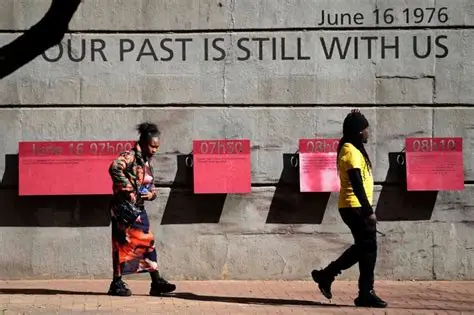
South Africa on Tuesday commemorated the 50th anniversary of the Soweto uprising, a pivotal event in the country’s struggle against apartheid. On June 16, 1976, more than 200 young protesters demonstrating against the apartheid education system were shot and killed by police forces.
South Africa young protesters in 1976
Now observed annually as Youth Day, the uprising is widely regarded as a turning point in South Africa’s liberation movement against white minority rule. It sparked widespread demonstrations across the country, intensified resistance against apartheid, and drew international awareness to the racial oppression faced by Black South Africans.
Despite the passage of five decades, concerns remain about the challenges confronting the nation’s youth. Survivors of the uprising, experts, and young people themselves have highlighted ongoing issues such as inequality, high unemployment, poverty, and social problems including drug and alcohol abuse.
Soweto, one of South Africa’s oldest townships, retains powerful symbols of that historic day and attracts visitors from both within the country and abroad. Among these is the Hector Pieterson Memorial, named after the 13-year-old boy immortalized in an iconic photograph carrying his lifeless body during the protests—a poignant image that came to symbolize the 1976 uprising worldwide.
Throughout the township, murals and billboards depict scenes of student protest, while the June 16 Memorial stands as a tribute to the uprising and its enduring legacy. For those who lived through the events, however, these symbols serve as painful reminders of a day that altered their lives forever.
Seth Mazibuko, a survivor of the protests, recalls the fierce resistance students put up against police using tear gas to disperse them. “They struggled with the tear gas because when they threw it our way, the wind would blow the gas back to them, so it was also affecting them,” he said. “They then started sending police dogs at us, and we used stones to chase the dogs away.”
Mazibuko was arrested, detained for 18 months, and later imprisoned on Robben Island, where he spent seven years alongside other political prisoners.
While South Africa has undergone significant transformation since the uprising, socio-economic challenges such as inequality, unemployment, and poverty continue to affect the country’s “born free” generation—those born after apartheid’s end.
“I would say poverty and crime are the most pressing issues,” said Sima Poto, a 19-year-old visitor at the June 16 Memorial. “It is poverty that is leading many into crime.”
Another Historian Noor Nieftagodien described the 1976 student protests as a traumatic yet transformative moment that reshaped the anti-apartheid struggle by placing young people at its forefront. “This was a generation that was young, gifted, and Black,” he said. “They wanted education.”
Nieftagodien also lamented that since June 16 became a public holiday after apartheid ended, the historic event’s significance has been diluted by celebrations that overshadow its political meaning. “It has lost its meaning,” he said. “We’ve had the day marked by concerts and similar events. While I’m not opposed to concerts, these celebrations have disconnected the day from its political roots and critical understanding of what actually happened.”

Olu Jacobs Dies at 84: Remembering the Life and Legacy of a Nollywood Icon

Condolence: AB HASKE Foundation Mourns Bamanga Tukur

Falconets Become Sole African Team in Knockout Stage After 10-1 Rout

Fintiri Mourns Ex-Gongola Governor, Bamanga Tukur, Declares Three Days Mourning

Fintiri Inaugurates ASCTIES Gulak Governing Board, Tasks Members on Development
Olu Jacobs Dies at 84: Remembering the Life and Legacy of a Nollywood Icon
Condolence: AB HASKE Foundation Mourns Bamanga Tukur
Falconets Become Sole African Team in Knockout Stage After 10-1 Rout
Fintiri Mourns Ex-Gongola Governor, Bamanga Tukur, Declares Three Days Mourning
Fintiri Inaugurates ASCTIES Gulak Governing Board, Tasks Members on Development
Olu Jacobs Dies at 84: Remembering the Life and Legacy of a Nollywood Icon
Condolence: AB HASKE Foundation Mourns Bamanga Tukur
Falconets Become Sole African Team in Knockout Stage After 10-1 Rout
Fintiri Mourns Ex-Gongola Governor, Bamanga Tukur, Declares Three Days Mourning