
Politics
June 12 at 27: Democracy in Nigeria Between Promise and Reality

June 12 at 27: Democracy in Nigeria Between Promise and Reality
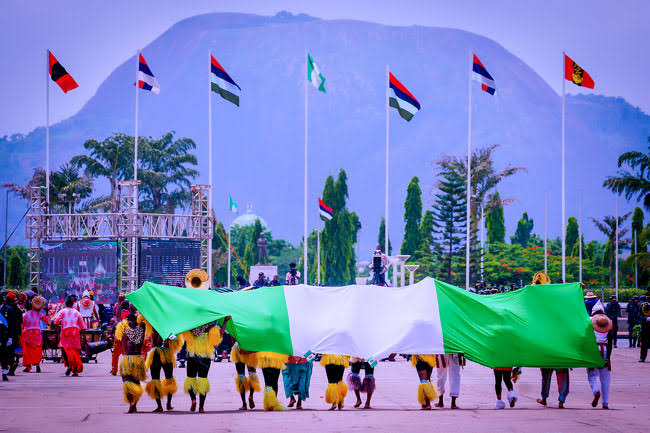
Every 12 June Nigerians commemorate Democracy Day in honour of the struggle that culminated in the restoration of democratic governance in 1999. The date also serves as a tribute to the presumed winner of the June 12, 1993 presidential election, Chief Moshood Kashimawo Olawale (M.K.O.) Abiola, whose mandate remains a symbol of the people’s democratic will.
Twenty-seven years after the return to civil rule, the question many citizens continue to ask is whether democracy has delivered its promised dividends. The answer is neither a simple yes nor no. Rather, Nigeria’s democratic journey presents a mixture of notable achievements and persistent challenges.

One of the greatest gains of democracy since 1999 is political stability. Unlike the era of military rule characterized by abrupt changes in government, democratic governance has ensured regular elections and constitutional transfer of power. Political parties have emerged and evolved, while citizens enjoy greater freedoms of expression, association, and participation in governance than under military administrations.
The media landscape has also witnessed significant growth. Journalists, civil society organizations, and ordinary citizens now play more active roles in holding leaders accountable. Social media and digital communication platforms have further expanded civic engagement, allowing Nigerians to express opinions and demand transparency from public officials.

In terms of infrastructure and development, successive administrations have recorded varying degrees of progress. Roads, airports, rail transportation, telecommunications, educational institutions, and healthcare facilities have expanded across different parts of the country. The telecommunications revolution, in particular, has transformed business, banking, communication, and access to information, creating opportunities unimaginable in 1999.
Democracy has equally deepened federalism by strengthening the role of state and local governments. Various social intervention programmes, youth empowerment schemes, and economic reforms have been introduced over the years to improve living standards and reduce poverty.
However, these achievements are often overshadowed by the realities confronting millions of Nigerians. Despite abundant human and natural resources, poverty remains widespread. Unemployment and underemployment continue to affect a significant portion of the population, especially young people. Inflation, rising food prices, and the increasing cost of living have placed enormous pressure on households and businesses.
The security situation presents another major challenge. Insurgency in the North-East, banditry in the North-West, farmer-herder conflicts in parts of the Middle Belt, kidnapping for ransom, communal clashes, and other forms of criminality have threatened lives and livelihoods. Many communities have experienced displacement, loss of property, and disruptions to economic activities.
Corruption also remains a major concern. While anti-corruption agencies and reforms have recorded some successes, allegations of misuse of public resources continue to undermine public confidence in government institutions. Many citizens argue that the benefits of economic growth have not translated into improved living conditions for the majority.
Electoral processes have equally attracted criticism. Although elections have become more regular and technologically advanced, concerns about vote-buying, electoral violence, litigation, and the credibility of outcomes still persist. Strengthening electoral integrity remains essential for deepening democratic culture.
Nevertheless, it would be unfair to judge democracy solely by current hardships. Democracy is not merely the provision of roads, electricity, or employment. It is also about the right of citizens to choose their leaders, hold them accountable, criticize government policies, and seek redress through lawful institutions. These democratic freedoms remain significant achievements that should not be taken for granted.
As Nigeria marks 27 years of uninterrupted democratic rule, the celebration should serve not only as a moment of reflection but also as a call to action. Government at all levels must intensify efforts to address insecurity, create jobs, strengthen institutions, fight corruption, and improve the welfare of citizens. At the same time, Nigerians must continue to participate actively in the democratic process and demand responsible leadership.
Ultimately, the verdict on Nigeria’s democracy after 27 years is mixed. The nation has made undeniable progress in sustaining democratic governance and expanding civic freedoms. Yet, the persistence of socio-economic hardships and security challenges means that many citizens are still waiting for the full dividends of democracy.

The journey has been significant, but the destination remains a work in progress.
This version maintains a fair balance by acknowledging both the gains and shortcomings of Nigeria’s democratic experience since 1999.





ADSU Makes Historic Breakthrough, Secures ₦40 Million TETFund Research Grant

NEDC Supports Adamawa Communities with Relief for Boko Haram Attack Victims

Farmers in Adamawa Community Seek Urgent Intervention Over Rampaging Hippopotamus

Governor Fintiri Wins Continental Food Security Award

Terrorists kill 30 in fresh Kaduna community attack
ADSU Makes Historic Breakthrough, Secures ₦40 Million TETFund Research Grant
NEDC Supports Adamawa Communities with Relief for Boko Haram Attack Victims
Farmers in Adamawa Community Seek Urgent Intervention Over Rampaging Hippopotamus
Governor Fintiri Wins Continental Food Security Award
Terrorists kill 30 in fresh Kaduna community attack
ADSU Makes Historic Breakthrough, Secures ₦40 Million TETFund Research Grant
NEDC Supports Adamawa Communities with Relief for Boko Haram Attack Victims
Farmers in Adamawa Community Seek Urgent Intervention Over Rampaging Hippopotamus
Governor Fintiri Wins Continental Food Security Award