
Business
Morocco: West African Leaders Back $25b Nigeria-Morocco Gas Pipeline

Morocco: West African Leaders Endorse $25 Billion Nigeria-Morocco Gas Pipeline
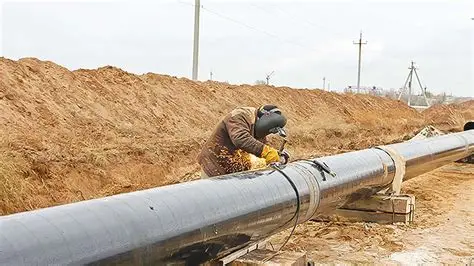
West African leaders have officially endorsed the Nigeria-Morocco Gas Pipeline, providing critical political backing for the $25 billion project aimed at transporting natural gas across West Africa and into Europe. This initiative comes as the continent seeks to enhance energy security and deepen regional integration.
Nigeria-Morocco Gas Pipeline
During their summit in Sierra Leone on Sunday, heads of state from the Economic Community of West African States (ECOWAS) unanimously approved the pipeline project. The proposed 6,800-kilometer pipeline will link Nigeria to Morocco, traversing 13 West African nations before connecting with the existing Maghreb-Europe Gas Pipeline that supplies Spain. To manage the project’s development, a dedicated company will be established in Casablanca, alongside a higher coordinating authority based in Abuja to oversee financing and prepare for the final investment decision.
The pipeline is being developed jointly by Morocco’s National Office of Hydrocarbons and Mines (ONHYM) and the Nigerian National Petroleum Company (NNPC). It is expected to transport up to 30 billion cubic meters of natural gas annually, with roughly half destined for Morocco and European markets. Additionally, the pipeline will connect gas reserves from countries such as Nigeria, Senegal, and Mauritania, opening new export routes while supplying participating West African economies.
First proposed by Morocco in 2016, the project has gained significant momentum amid Europe’s efforts to diversify natural gas supplies following recent geopolitical disruptions in global energy markets. NNPC Chief Executive Officer Bayo Ojulari emphasized that the ECOWAS endorsement provides a sovereign framework essential for transitioning the project from planning to implementation.
This political approval represents one of the strongest milestones for the Nigeria-Morocco Gas Pipeline since its announcement nearly a decade ago. Although key financing, engineering, and commercial agreements remain pending, regional consensus significantly mitigates one of the project’s major risks. Beyond serving European markets, the pipeline aims to transform West Africa’s energy landscape by linking countries with limited natural gas access. The infrastructure promises to support electricity generation, industrial growth, and regional trade among participant nations while establishing a new export corridor for Nigerian gas.
The project also highlights intensifying competition over Africa’s energy transit routes. Algeria is simultaneously advancing the Trans-Saharan Gas Pipeline, which plans to carry Nigerian gas northward through Niger to Algeria before connecting to Europe. Both pipelines strive to position Africa as a reliable long-term supplier to European energy markets but differ significantly in terms of geography, security concerns, and involved countries.
If completed, the Nigeria-Morocco pipeline will rank among the world’s longest offshore and onshore gas pipelines and become one of Africa’s largest cross-border infrastructure projects—linking energy development with expanded regional economic integration.

Morocco: West African Leaders Back $25b Nigeria-Morocco Gas Pipeline
Spain hold World Cup trophy parade

Insecurity: Tinubu approves new army battalion for Kwara
English FA names referees for Arsenal, City Community Shield clash

FIFA rankings: Nigeria drop to 4th in Africa
Morocco: West African Leaders Back $25b Nigeria-Morocco Gas Pipeline
Spain hold World Cup trophy parade
Insecurity: Tinubu approves new army battalion for Kwara
English FA names referees for Arsenal, City Community Shield clash
FIFA rankings: Nigeria drop to 4th in Africa
Morocco: West African Leaders Back $25b Nigeria-Morocco Gas Pipeline
Spain hold World Cup trophy parade
Insecurity: Tinubu approves new army battalion for Kwara
English FA names referees for Arsenal, City Community Shield clash