
Sports
FIFA World Cup 2026: Early Group Battles Signal a Tournament of Surprises and High Stakes

FIFA World Cup 2026: Early Group Battles Signal a Tournament of Surprises and High Stakes
The ongoing FIFA World Cup in Mexico, Canada and the United States has already produced a mixture of expected victories, impressive performances and early warnings that no team can afford to underestimate any opponent.
With the expanded 48-team format bringing more nations onto football’s biggest stage, the opening group matches have shown a competition filled with ambition, tactical discipline and unexpected challenges.

The opening games have provided strong statements from some of the traditional football powers while also highlighting the progress of emerging teams.
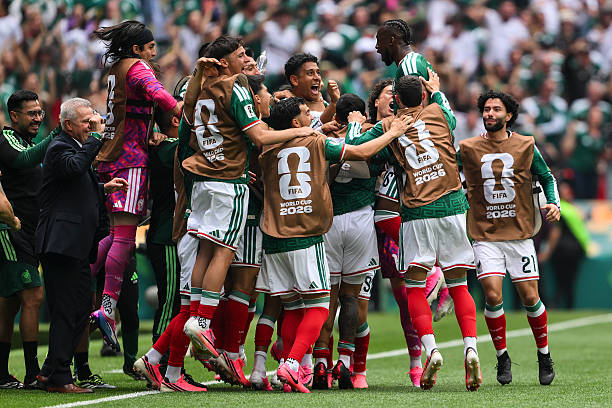
Hosts Mexico made a confident start by defeating South Africa 2-0, giving the home supporters an early celebration and strengthening their hopes of making a deep run on home soil. The United States also impressed with a convincing 4-1 victory over Paraguay, showing attacking quality and the confidence expected from a host nation.
Canada, another host nation, had to settle for a 1-1 draw against Bosnia and Herzegovina, a result that demonstrated the competitive nature of the tournament. While Canada showed resilience, the result also revealed that hosting the World Cup does not automatically guarantee easy progress, as every team has arrived with a strong desire to make history.

Several matches have reinforced the belief that the gap between traditional giants and developing football nations is narrowing. Germany’s big win over Curaçao, Norway’s impressive performance against Iraq and Argentina’s commanding victory over Algeria have shown the quality available among the established contenders. However, other results, including draws involving highly rated teams, have reminded favourites that reputation alone will not secure qualification.
For African teams, the opening stage has brought mixed emotions. Senegal showed competitiveness against France despite defeat, while other African representatives will be looking to respond strongly in their remaining opening fixtures.
The tournament provides another opportunity for African football to demonstrate its growing strength and challenge the traditional dominance of Europe and South America.
As the remaining first-round group matches continue, attention now shifts to teams yet to make their tournament statements. The next fixtures will be crucial because an opening victory can provide a strong foundation, while a defeat can leave teams under immediate pressure.
Major encounters such as England versus Croatia, Ghana versus Panama, Portugal versus DR Congo and Colombia versus Uzbekistan are expected to attract global attention because they involve teams with ambitions of reaching the knockout stages.

The second wave of matches will also test whether early winners can maintain momentum. Mexico will face South Korea, Canada will meet Qatar, and the United States will take on Australia in matches that could significantly shape the direction of their respective groups.
The new 48-team format means qualification routes are broader, but competition is also more intense. Teams must balance attacking ambition with defensive discipline because goal difference, concentration and consistency could determine who advances.
Beyond the results, the tournament is already proving that the World Cup remains football’s greatest stage — a place where established champions must respect rising nations and where every match carries the possibility of drama.
With more group matches ahead, fans can expect further surprises, tactical battles and moments that could define the journey to the knockout rounds of the 2026 FIFA World Cup.
-
MEXICO CITY, MEXICO - JUNE 11: Mexican players celebrate the team's first goal by Julian Quinones #16 during the FIFA World Cup 2026 Group A match between Mexico and South Africa at Mexico City Stadium on June 11, 2026 in Mexico City, Mexico. (Photo by David Ramos/Getty Images)
-
-
-
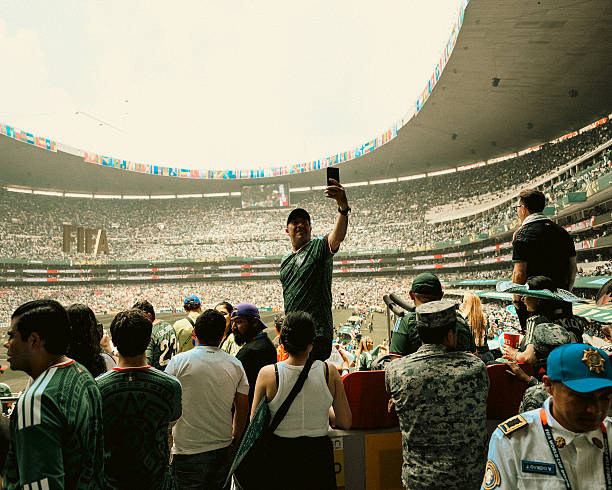
MEXICO CITY, MEXICO - JUNE 11: (EDITOR’S NOTE: This image has been digitally enhanced) A Mexican fan takes a selfie in the stands before the FIFA World Cup 2026 Group A match between Mexico and South Africa at Mexico City Stadium on June 11, 2026 in Mexico City, Mexico. (Photo by David Ramos/Getty Images)
-












IMF Urges FG Against Restoring Petrol Subsidy, Recommends Targeted Support for Vulnerable Nigerians

Hundreds of APM Members Defect to Labour Party in Adamawa’s Girei LGA Ahead of 2027

NBBF Zonal Rep Donates Basketball Equipment to Adamawa State Association


Adamawa Assembly Moves to Repeal College of Education Hong Law
IMF Urges FG Against Restoring Petrol Subsidy, Recommends Targeted Support for Vulnerable Nigerians
Hundreds of APM Members Defect to Labour Party in Adamawa’s Girei LGA Ahead of 2027
NBBF Zonal Rep Donates Basketball Equipment to Adamawa State Association
Adamawa Assembly Moves to Repeal College of Education Hong Law
IMF Urges FG Against Restoring Petrol Subsidy, Recommends Targeted Support for Vulnerable Nigerians
Hundreds of APM Members Defect to Labour Party in Adamawa’s Girei LGA Ahead of 2027
NBBF Zonal Rep Donates Basketball Equipment to Adamawa State Association