
Health
Meningitis outbreak kills 33 in Sokoto

Meningitis outbreak kills 33 in Sokoto
The Sokoto State Government has confirmed the death of 33 children following a fresh outbreak of cerebrospinal meningitis in parts of the state, as health authorities battle a growing number of infections.
Cerebrospinal meningitis is a deadly infection that causes inflammation of the protective membranes covering the brain and spinal cord.
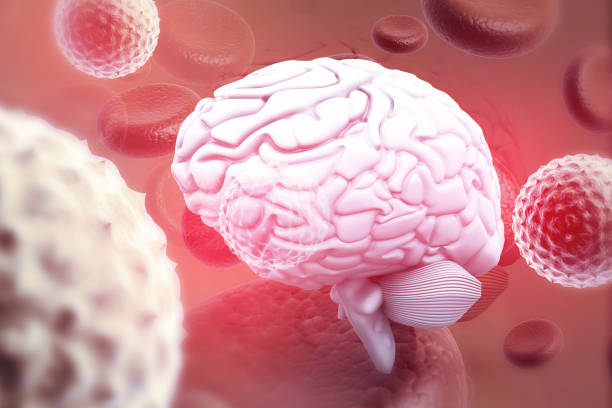
Virus attacking human brain.
It spreads more easily during the dry and hot season, particularly in overcrowded communities with poor ventilation.
Northern Nigeria, including Sokoto State, falls within Africa’s “meningitis belt,” a region known for recurring outbreaks.
Confirming the outbreak, Commissioner for Health, Faruk Abubakar, disclosed this on Wednesday during an advocacy meeting with district heads on SARMAAN and MNTE.
The meeting was organised by the State Primary Healthcare Development Agency in collaboration with Sightsavers and the Chigari Foundation.
The commissioner stated, “No fewer than 256 suspected cases have been recorded across eight local government areas since the outbreak resurfaced about a month ago.
“Sabon Birni recorded the highest number with 63 cases, followed by Wamakko with 60, Shagari with 51, Tambuwal with 33, and Dange Shuni with 26. Kebbe reported 16 cases, while Bodinga, Gada and Kware recorded two, one and two cases respectively.”
Abubakar said most of the deaths occurred in communities before victims could be taken to health facilities, blaming delayed treatment and widespread misconceptions that the illness is spiritual rather than a serious medical emergency.
Symptoms of meningitis often include sudden fever, severe headache, neck stiffness, vomiting, sensitivity to light, confusion and convulsions.
Health experts warn that without urgent treatment, the disease can lead to death within hours or cause permanent complications such as hearing loss, brain damage or paralysis.
To curb the spread of the disease, the state government, in partnership with Médecins Sans Frontières (Doctors Without Borders), established isolation centres at the General Hospitals in Dogo Daji and Tambuwal, with separate wards for male and female patients.
He added that although only about 20 laboratory samples have tested positive so far, patients brought in early have responded well to treatment, with no recent deaths recorded since intensified interventions began.
However, findings from the Dogo Daji isolation centre indicate that the outbreak remains active.
Meanwhile, the Chief Medical Director of Specialists Hospital, Sokoto, Dr. Attahiru Sokoto, confirmed that the hospital earlier received meningitis patients from Badon Barade community in Wamakko Local Government Area about two weeks ago.
“All the patients were treated at our isolation centre and have since been discharged. As of today, we have no patient on admission,” he said.
Authorities have continued to urge residents to seek immediate medical attention once symptoms appear and to ignore false beliefs surrounding the disease as efforts to contain the outbreak intensify.


Adamawa Assembly Moves to Repeal College of Education Hong Law

BREAKING NEWS: Bridge Collapse Cuts Off Maiha-Mubi Road, Community Stranded

Adamawa Govt Pledges Stronger Media Partnership Ahead of 2027 Elections

Governor Fintiri Pardons Nine Inmates, Commutes Death Sentence to Mark Nigeria’s 66th Independence Anniversary In commemoration of Nigeria’s 66th Independence Day celebration, Governor Ahmadu Umaru Fintiri of Adamawa State has granted pardons to nine inmates serving various terms in correctional facilities across the state. A statement issued by the Chief Press Secretary to the Governor, Humwashi Wonosikou, said the Governor ordered the immediate release of the pardoned inmates, noting that all legal formalities had been concluded with the Nigerian Correctional Service. “The Governor acted on the advice of the Advisory Committee on the Prerogative of Mercy and in exercise of the powers conferred on him by Section 212(1)(d) of the Constitution of the Federal Republic of Nigeria, 1999 (as amended),” the statement said. According to the statement, those granted pardon and discharged include Abubakar Dajo, who was serving at the Maximum Security Custodial Centre, Jos; Zabadi Ayuba and Salvation Nyamso, both serving at the Numan Custodial Centre. Others are Amir Idris, Mohammed Saidu, Yaro Sambo, Buhari Salisu, Urube Samuel and Bamaiyi Amos, who were discharged from the Jimeta, Ganye, Guyuk, Yola Old and Kojoli Custodial Centres, respectively. In addition to the pardons, Governor Fintiri approved the commutation of the death sentence imposed on one inmate, Saidu Abdullahi of the Yola Old Custodial Centre, to life imprisonment. The Governor’s action, the statement noted, was in the spirit of the Independence anniversary and reflects the government’s commitment to mercy, justice and the rehabilitation of offenders. The pardons and commutation take immediate effect, the statement added.
Adamawa Assembly Moves to Repeal College of Education Hong Law
BREAKING NEWS: Bridge Collapse Cuts Off Maiha-Mubi Road, Community Stranded
Adamawa Govt Pledges Stronger Media Partnership Ahead of 2027 Elections
Governor Fintiri Pardons Nine Inmates, Commutes Death Sentence to Mark Nigeria’s 66th Independence Anniversary In commemoration of Nigeria’s 66th Independence Day celebration, Governor Ahmadu Umaru Fintiri of Adamawa State has granted pardons to nine inmates serving various terms in correctional facilities across the state. A statement issued by the Chief Press Secretary to the Governor, Humwashi Wonosikou, said the Governor ordered the immediate release of the pardoned inmates, noting that all legal formalities had been concluded with the Nigerian Correctional Service. “The Governor acted on the advice of the Advisory Committee on the Prerogative of Mercy and in exercise of the powers conferred on him by Section 212(1)(d) of the Constitution of the Federal Republic of Nigeria, 1999 (as amended),” the statement said. According to the statement, those granted pardon and discharged include Abubakar Dajo, who was serving at the Maximum Security Custodial Centre, Jos; Zabadi Ayuba and Salvation Nyamso, both serving at the Numan Custodial Centre. Others are Amir Idris, Mohammed Saidu, Yaro Sambo, Buhari Salisu, Urube Samuel and Bamaiyi Amos, who were discharged from the Jimeta, Ganye, Guyuk, Yola Old and Kojoli Custodial Centres, respectively. In addition to the pardons, Governor Fintiri approved the commutation of the death sentence imposed on one inmate, Saidu Abdullahi of the Yola Old Custodial Centre, to life imprisonment. The Governor’s action, the statement noted, was in the spirit of the Independence anniversary and reflects the government’s commitment to mercy, justice and the rehabilitation of offenders. The pardons and commutation take immediate effect, the statement added.
Adamawa Assembly Moves to Repeal College of Education Hong Law
BREAKING NEWS: Bridge Collapse Cuts Off Maiha-Mubi Road, Community Stranded
Adamawa Govt Pledges Stronger Media Partnership Ahead of 2027 Elections