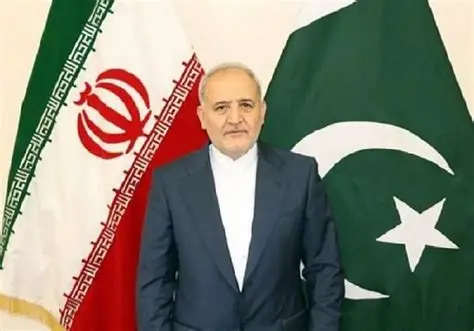
“The resolution has been drafted without due regard to the root causes of the crisis and the acts of aggression carried out against the Islamic Republic of Iran and therefore represents yet another example of a selective approach and double standards within the Security Council,” he added.
The ambassador maintained that Iran’s actions were carried out within the framework of international law, particularly its right to self-defence.
“The Islamic Republic of Iran reiterates that the measures taken were solely within the framework of its inherent right to self-defence in accordance with Article 51 of the United Nations Charter,” he stated.
Raja further argued that those responsible for escalating tensions in the region were parties whose actions had contributed to instability.
“It is evident that the responsibility for escalating tensions in the region lies with those parties whose provocative and aggressive actions have contributed to instability and insecurity,” he said.
He added that Iran remained committed to international law and peaceful conflict resolution.
“The Islamic Republic of Iran has consistently emphasised the importance of respecting the principles of international law, preserving regional peace and stability, and resolving disputes through dialogue and diplomatic means, while at the same time reserving its legitimate right to defend its sovereignty, security and territorial integrity,” he noted.
The United Nations Security Council had on Wednesday adopted a resolution condemning Iran’s attack on countries in the Gulf region and Jordan, urging Tehran to immediately halt hostilities.
The resolution, presented by Bahrain and co-sponsored by 135 member states of the United Nations, was adopted with 13 votes in favour, while Russia and China abstained.
The Council strongly condemned what it described as “egregious attacks by the Islamic Republic of Iran” against Gulf countries and Jordan, saying the strikes constituted a breach of international law and posed a serious threat to international peace and security.
It also denounced the targeting of civilian infrastructure, including ports and energy facilities, noting that the attacks resulted in civilian casualties and damage to buildings.
Meanwhile, Raja also responded to a complaint submitted by Qatar to the United Nations alleging repeated missile and drone attacks on its territory by Iran.
According to a statement by the Qatar Ministry of Foreign Affairs, the country filed its eighth formal complaint to the UN and the Security Council. The complaint was submitted by Qatar’s Permanent Representative to the UN, Sheikha Alya Ahmed bin Saif Al-Thani.
Qatar said the letter was intended to inform the UN of what it described as Iranian military aggression and its implications for regional security and stability.
“This aggression constitutes a blatant violation of its national sovereignty, a direct threat to its security and territorial integrity, and an unacceptable escalation that jeopardises the security and stability of the region,” the letter stated.
However, Raja insisted that Iran’s military operations were directed solely at targets associated with the United States.
“The Islamic Republic of Iran reiterates that its actions were directed solely at military targets associated with the United States and were carried out within the framework of its inherent right to self-defence under Article 51 of the United Nations Charter,” he said.
He added that Iran had no intention of targeting neighbouring countries and valued its relations with them, including Qatar.
“The Islamic Republic of Iran has no intention of targeting neighbouring countries and continues to attach great importance to its friendly relations and good-neighbourly ties with the countries of the region, including the State of Qatar,” Raja said.
He further stated that the presence and use of foreign military bases in the region to launch hostile actions against Iran remained a major factor fuelling the current tensions.
“The Islamic Republic of Iran remains committed to maintaining regional stability and emphasises that dialogue, mutual respect and adherence to international law are essential for ensuring peace and security in the region,” he added.